
- (5.0 Star)
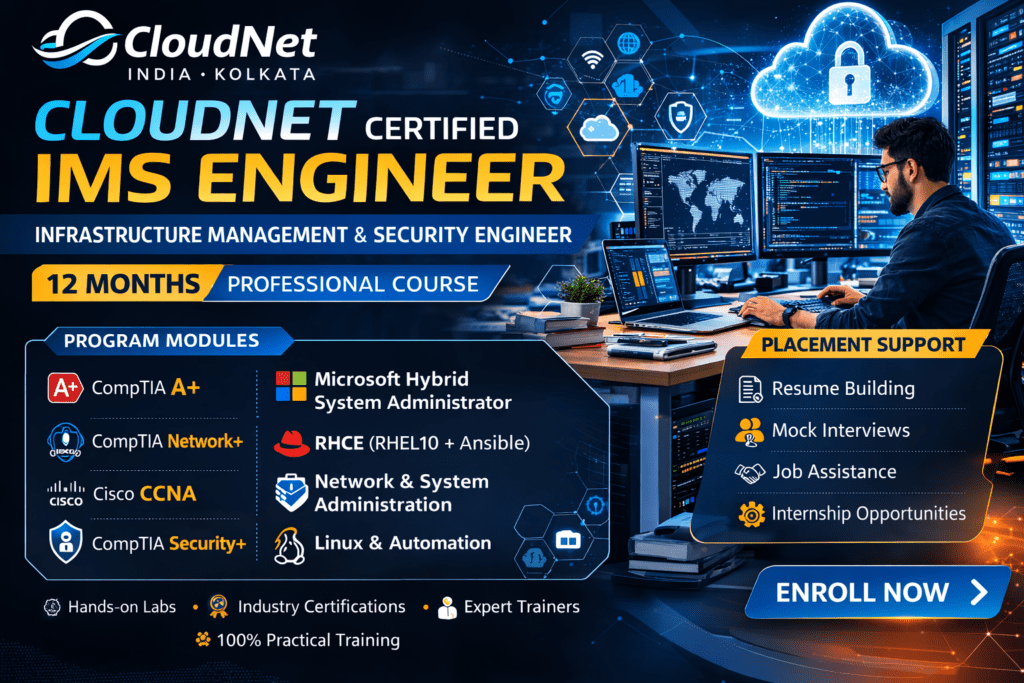
CloudNet Certified IMS Engineer
Professional Diploma Training
We offer instructor-led online live virtual training and physical classroom training delivered by certified trainers and experienced industry professionals
- Get Up to 25% discount
About Course
CloudNet Certified IMS Engineer
The CloudNet Certified IMS Engineer (Infrastructure Management & Security Engineer) program offered by CloudNet India is a comprehensive IT infrastructure, networking, system administration, and cybersecurity training program designed to prepare students for modern enterprise IT environments.
This program combines globally recognized certifications with hands-on lab training and real-world enterprise scenarios to build strong expertise in IT support, networking, system administration, Linux administration, and infrastructure security.
The course prepares students to manage enterprise networks, servers, and hybrid IT environments, making them industry-ready for careers in IT infrastructure and security operations.
Course Duration
Duration: 12 Months
The program includes:
- Instructor-led technical training
- Hands-on lab practice
- Enterprise infrastructure simulations
- Certification preparation
- Career and placement support
Program Certifications Covered
The CloudNet Certified IMS Engineer program includes training aligned with the following globally recognized certifications.
CompTIA A+
Fundamentals of computer hardware, operating systems, troubleshooting, and IT support required for entry-level IT infrastructure roles.
CompTIA Network+
Networking fundamentals including network architecture, TCP/IP protocols, routing, switching, wireless networking, and network troubleshooting.
Cisco CCNA
Enterprise networking technologies including VLANs, routing protocols, switching infrastructure, WAN technologies, and network automation concepts.
CompTIA Security+
Core cybersecurity principles including network security, threat management, identity management, cryptography, and risk management.
Microsoft Hybrid System Administrator
Administration of Windows Server environments including Active Directory, virtualization, identity management, and hybrid cloud infrastructure.
RHCE (RHEL 10 + Ansible Automation)
Enterprise Linux administration using **Red Hat Enterprise Linux along with infrastructure automation using **Ansible to manage enterprise environments efficiently.
Key Features
You will get 100% job Assurance and life time e-placement support
classed taken by globally certified trainers
You will get 3 year Dedicated placement support
Courses are globally recognized & accredited
Skills You Will Gain
Students completing this program will gain practical expertise in:
- Computer hardware and IT support troubleshooting
- Enterprise networking design and management
- Windows Server and Active Directory administration
- Linux system administration and automation
- Cybersecurity fundamentals and security implementation
- Hybrid cloud infrastructure management
- Enterprise infrastructure monitoring and maintenance
Who Can Join
This program is suitable for:
- B.Tech / BCA / MCA students
- Diploma in Computer Science students
- IT or Computer Science graduates
- Freshers who want to start a career in IT infrastructure
- IT support engineers looking to upgrade their skills
- Professionals who want to transition into system administration or network engineering
Basic computer knowledge is recommended, but no advanced networking experience is required.
Job Roles After Completion
After completing the CloudNet Certified IMS Engineer program, candidates can pursue roles such as:
- IT Support Engineer
- Desktop Support Engineer
- Network Engineer
- System Administrator
- Linux System Administrator
- Infrastructure Engineer
- Technical Support Specialist
- IT Operations Engineer
Placement Support
Students enrolled through **CloudNet India located in Kolkata will receive dedicated career and placement support, including:
- Resume preparation and LinkedIn profile development
- Technical interview preparation
- Mock interviews and career counseling
- Internship opportunities
- Job referrals to IT companies and service providers
CloudNet collaborates with various IT service providers, system integrators, and technology companies to help students start successful careers in the IT industry.
Course Highlights
- 12-month structured professional program
- Industry-recognized certification aligned curriculum
- Hands-on lab training and real enterprise scenarios
- Experienced industry trainers
- Certification exam preparation guidance
- Placement assistance and career support
Course Type:
Professional Diploma Training
Live virtual classroom:
₹ 60,000/-
₹ 75,000/-
Regular classroom:
₹ 60,000/-
₹ 75,000/-
- Duration:
12 Months
- Enrolled:
84 Learners
- Eligibility:
10+2 / Graduate
- 5 Star:
15 Reviews
IMS Engineer Full Syllabus
CompTIA A+ Module-wise Training Structure (220-1101 & 220-1102)
Total Duration: 10–12 Weeks (80 Hours)
Training Mode: Classroom / Online / Hybrid
Level: Entry-Level IT Support
MODULE 1: IT Fundamentals & Professional Skills
- Introduction to IT support roles
- IT service environments
- Computer system overview
- Data representation basics
- Safety procedures and ESD precautions
- Professional communication skills
- IT documentation basics
Outcome: Strong foundation in IT concepts and workplace practices
MODULE 2: Computer Hardware Fundamentals
- Motherboard architecture
- Processor types and features
- Memory technologies
- Storage devices and interfaces
- Power supply units
- Cooling and form factors
- BIOS and UEFI concepts
Outcome: Ability to identify, install, and understand PC hardware
MODULE 3: Peripheral Devices & Printing Technologies
- Input and output devices
- Display technologies
- Expansion cards
- Printer types and components
- Printer installation and configuration
- Printer maintenance procedures
- Common printer issues and resolution
Outcome: Efficient handling of peripherals and printers
MODULE 4: Mobile Devices & Laptop Support
- Laptop hardware components
- Laptop display and battery technologies
- Mobile devices overview
- Mobile accessories and ports
- Mobile connectivity options
- Mobile operating system basics
- Mobile device troubleshooting
Outcome: Support and maintain laptops and mobile devices
MODULE 5: Networking Essentials
- Network types and topologies
- Network cables and connectors
- IP addressing fundamentals
- Common ports and protocols
- Networking devices
- Wireless technologies
- Small office and home office networking
Outcome: Configure and troubleshoot basic networks
MODULE 6: Virtualization & Cloud Concepts
- Virtualization fundamentals
- Virtual machine concepts
- Hypervisor types
- Cloud computing overview
- Cloud service models
- Cloud deployment models
- Client-side virtualization use cases
Outcome: Understand modern IT infrastructure environments
MODULE 7: Hardware & Network Troubleshooting
- Structured troubleshooting approach
- Common hardware failures
- Storage and boot-related issues
- Network connectivity problems
- Preventive maintenance
- Safety and escalation procedures
Outcome: Diagnose and resolve hardware and network issues
MODULE 8: Operating Systems Fundamentals
- Operating system concepts
- Operating system installation methods
- System configuration tools
- Disk and file management
- System maintenance practices
- Cross-platform OS overview
Outcome: Manage and maintain operating systems effectively
MODULE 9: Command-Line & System Utilities
- Command-line interface concepts
- Common system utilities
- File and process management
- Disk and system monitoring tools
- Administrative utilities
Outcome: Confident use of system management tools
MODULE 10: Security Fundamentals
- Security concepts and principles
- Threats and vulnerabilities
- Malware types and prevention
- Authentication and access control
- Encryption basics
- Wireless and workstation security
Outcome: Secure systems and prevent common attacks
MODULE 11: Software & OS Troubleshooting
- Operating system startup issues
- Application errors and crashes
- Malware-related problems
- Mobile OS issues
- Performance optimization techniques
Outcome: Resolve software-related issues efficiently
MODULE 12: Operational Procedures & Job Readiness
- Change management concepts
- Backup and recovery principles
- Disaster recovery overview
- Workplace safety standards
- Environmental best practices
- Resume and interview preparation
Outcome: Job-ready IT support professional
Final Learning Outcomes
- Industry-ready IT support skills
- Strong troubleshooting capability
- Global certification alignment
- Entry-level IT job readiness
Career Opportunities
- Help Desk Technician
- Desktop Support Engineer
- IT Support Executive
- Field Support Technician
CompTIA Network+
Total Duration: 8–10 Weeks (50 Hours)
Training Mode: Classroom / Online / Hybrid
Level: Entry-Level to Intermediate Networking
MODULE 1: Networking Fundamentals
- Introduction to computer networking
- Network types and use cases
- Network topologies
- OSI and TCP/IP models
- Data transmission basics
- Network standards overview
Outcome: Strong foundation in networking concepts and models
MODULE 2: Network Cables, Ports & Interfaces
- Copper and fiber-optic cabling
- Cable standards and connectors
- Network interface cards
- Port numbers and services overview
- Transceivers and media types
Outcome: Ability to identify and work with network media
MODULE 3: IP Addressing & Subnetting
- IPv4 and IPv6 concepts
- Binary and decimal conversion
- Subnetting fundamentals
- CIDR notation
- Public vs private addressing
- Address assignment methods
Outcome: Understand IP addressing and basic subnetting
MODULE 4: Network Devices & Infrastructure
- Switches and routers
- Wireless access points
- Firewalls and security appliances
- Load balancers and proxies
- Network design basics
- On-premise vs cloud infrastructure
Outcome: Deploy and understand network infrastructure components
MODULE 5: Routing, Switching & Wireless Concepts
- Switching concepts
- Routing fundamentals
- Static and dynamic routing overview
- VLAN concepts
- Wireless standards and frequencies
- Wireless configuration basics
Outcome: Build and manage basic wired and wireless networks
MODULE 6: Network Services & Applications
- DNS, DHCP concepts
- Web and email services
- File and print services
- VoIP and collaboration tools
- Network management services
Outcome: Support common network services and applications
MODULE 7: Network Security Fundamentals
- Security concepts and principles
- Network threats and attacks
- Firewalls and access control
- VPN concepts
- Wireless security
- Network hardening basics
Outcome: Secure network environments against common threats
MODULE 8: Network Monitoring & Troubleshooting
- Network monitoring concepts
- Performance metrics
- Troubleshooting methodology
- Common network issues
- Network diagnostic tools overview
- Incident documentation
Outcome: Diagnose and resolve network problems efficiently
MODULE 9: Cloud, Virtualization & Modern Networking
- Virtual networking concepts
- Cloud networking basics
- Software-defined networking overview
- Network automation fundamentals
- Remote connectivity solutions
Outcome: Understand modern and cloud-based networking
MODULE 10: Operational Procedures & Job Readiness
- Network documentation
- Change management
- Disaster recovery concepts
- Compliance and policies
- Professional communication
- Resume and interview preparation
Outcome: Job-ready networking professional
Final Learning Outcomes
- Practical networking knowledge
- Strong troubleshooting skills
- Industry-aligned networking foundation
- Readiness for global certification
Career Opportunities
- Network Support Technician
- Network Administrator (Junior)
- NOC Engineer
- IT Infrastructure Support Engineer
CCNA
Total Duration: 10–12 Weeks (60–70 Hours)
Training Mode: Classroom / Online / Hybrid
Level: Entry-Level Networking
MODULE 1: Networking Fundamentals
- Introduction to computer networks
- Network components and roles
- Types of networks and topologies
- Data transmission concepts
- Network standards overview
Outcome: Understand how networks work and why they are used
MODULE 2: OSI & TCP/IP Models
- Purpose of layered models
- OSI model layers and functions
- TCP/IP model overview
- Data encapsulation and decapsulation
- Mapping OSI to TCP/IP
Outcome: Clear understanding of network communication models
MODULE 3: Network Media & Cabling
- Copper cabling types
- Fiber-optic cabling
- Cable standards and connectors
- Ethernet fundamentals
- Interface concepts
Outcome: Ability to identify and work with network media
MODULE 4: IP Addressing Concepts
- IPv4 addressing structure
- Binary and decimal basics
- Public and private IP addresses
- Addressing rules and formats
- Introduction to IPv6
Outcome: Understand IP addressing fundamentals
MODULE 5: Subnetting & Address Planning
- Purpose of subnetting
- Subnet masks and CIDR
- Subnet calculation basics
- Address planning concepts
- Common subnetting scenarios
Outcome: Create and understand subnetted networks
MODULE 6: Switching Concepts
- Ethernet switching overview
- MAC address learning
- Frame forwarding process
- VLAN concepts
- Inter-VLAN communication overview
Outcome: Understand how switches operate in LANs
MODULE 7: Routing Concepts
- Purpose of routing
- Router components and functions
- Static routing concepts
- Dynamic routing overview
- Default routing concepts
Outcome: Understand how data moves between networks
MODULE 8: Wireless Networking
- Wireless standards overview
- Wireless frequencies and channels
- Wireless devices and components
- Wireless security basics
- Wireless deployment concepts
Outcome: Configure and support wireless networks
MODULE 9: Network Services
- DNS concepts
- DHCP concepts
- NTP overview
- SNMP basics
- Network service roles
Outcome: Support essential network services
MODULE 10: Network Security Fundamentals
- Security principles
- Network threats and attacks
- Access control concepts
- Device hardening basics
- Firewall and security concepts
Outcome: Apply basic network security practices
MODULE 11: Automation & Programmability Basics
- Network automation concepts
- Software-defined networking overview
- Controller-based networking
- APIs and data formats overview
- Network management basics
Outcome: Understand modern network management approaches
MODULE 12: Network Troubleshooting & Operations
- Troubleshooting methodology
- Common network issues
- Connectivity problem analysis
- Network documentation
- Best practices and change management
Outcome: Diagnose and resolve common network problems
Final Learning Outcomes
- Strong networking fundamentals
- Practical switching and routing knowledge
- Awareness of network security and automation
- Readiness for entry-level networking roles
Career Opportunities
- Network Support Engineer
- Junior Network Administrator
- NOC Engineer
- IT Infrastructure Support Engineer
CompTIA Security+
Total Duration: 8–10 Weeks (50 Hours)
Training Mode: Classroom / Online / Hybrid
Level: Entry-Level to Intermediate Cybersecurity
MODULE 1: Cybersecurity Fundamentals
- Introduction to cybersecurity
- Importance of information security
- CIA triad concepts
- Security roles and responsibilities
- Types of security controls
Outcome: Understand core cybersecurity principles and objectives
MODULE 2: Threats, Attacks & Vulnerabilities
- Malware types and behavior
- Social engineering attacks
- Network-based attacks
- Application and web-based attacks
- Vulnerability concepts
- Threat intelligence basics
Outcome: Identify and understand common cyber threats and risks
MODULE 3: Network Security Concepts
- Secure network design principles
- Firewalls and network security devices
- Intrusion detection and prevention
- Secure network protocols
- Network segmentation concepts
Outcome: Protect and secure network infrastructures
MODULE 4: Identity & Access Management
- Authentication concepts
- Authorization models
- Accounting principles
- Identity federation concepts
- Access control methods
- Privileged access management
Outcome: Control and manage user access securely
MODULE 5: Cryptography & Public Key Infrastructure
- Encryption concepts
- Symmetric and asymmetric encryption
- Hashing concepts
- Digital certificates
- Public key infrastructure basics
- Secure communication principles
Outcome: Apply cryptographic concepts to secure data
MODULE 6: Secure Systems & Applications
- Secure system architecture
- Endpoint security concepts
- Secure application development basics
- Secure configuration principles
- Patch and vulnerability management
Outcome: Secure systems and applications against
MODULE 7: Cloud, Virtualization & Wireless Security
- Cloud security fundamentals
- Shared responsibility model
- Virtualization security concepts
- Wireless security standards
- Mobile device security
Outcome: Secure modern and cloud-based environments
MODULE 8: Risk Management & Governance
- Risk assessment concepts
- Risk response strategies
- Security policies and procedures
- Compliance and regulatory concepts
- Security frameworks overview
Outcome: Manage and reduce organizational security risks
MODULE 9: Security Operations & Incident Response
- Security monitoring concepts
- Incident response lifecycle
- Digital forensics basics
- Disaster recovery concepts
- Business continuity planning
Outcome: Respond effectively to security incidents
MODULE 10: Security Operations & Job Readiness
- Security documentation
- Change management
- Security awareness training
- Professional communication
- Resume and interview preparation
Outcome: Job-ready cybersecurity professional
Final Learning Outcomes
- Strong cybersecurity foundation
- Ability to identify and mitigate threats
- Practical understanding of security operations
- Industry-aligned security skills
Career Opportunities
- Security Analyst (Junior)
- SOC Analyst (Level 1)
- Cybersecurity Support Engineer
- Information Security Executive
RHCE (RHEL 10 + Ansible Automation)
Total Duration: 10–12 Weeks (60 Hours)
Training Mode: Classroom / Online / Hybrid
Level: Intermediate to Advanced Linux Administration
MODULE 1: Linux System Administration Fundamentals
- Role of a Linux system administrator
- Linux distributions and ecosystem
- RHEL architecture overview
- Installation concepts and system requirements
- Accessing and managing Linux systems
Outcome: Understand enterprise Linux environments and admin responsibilities
MODULE 2: File System & Storage Management
- Linux file system hierarchy
- File and directory permissions
- Ownership and access control
- Disk partitioning concepts
- Logical volume management basics
- Mounting and persistent storage
Outcome: Manage files, permissions, and storage effectively
MODULE 3: User, Group & Security Administration
- User and group management
- Password policies and authentication
- Privilege escalation concepts
- SELinux fundamentals
- Basic system security hardening
Outcome: Secure Linux systems and manage user access
MODULE 4: Package & Service Management
- Software package management concepts
- Managing repositories
- Installing and updating software
- Service management and system startup
- Scheduling tasks and logs overview
Outcome: Maintain system software and services reliably
MODULE 5: Networking & Firewall Management
- Network configuration concepts
- Managing network interfaces
- Hostname and name resolution
- Firewall fundamentals
- Network troubleshooting basics
Outcome: Configure and secure Linux network connectivity
MODULE 6: Process, Performance & System Monitoring
- Process management concepts
- System performance metrics
- Resource monitoring tools overview
- Log analysis basics
- Managing system performance issues
Outcome: Monitor and optimize Linux system performance
MODULE 7: Shell Scripting & Automation Basics
- Shell scripting fundamentals
- Variables and control structures
- Writing reusable scripts
- Task automation concepts
- Script troubleshooting
Outcome: Automate routine administrative tasks
MODULE 8: Ansible Fundamentals
- Automation concepts and benefits
- Ansible architecture overview
- Inventory management
- Modules and ad-hoc commands
- Playbook structure and execution
Outcome: Understand Ansible-based automation workflows
MODULE 9: Advanced Ansible Playbooks
- Variables and facts
- Conditionals and loops
- Roles and reusable content
- Templates and handlers
- Managing configurations at scale
Outcome: Build scalable and reusable automation solutions
MODULE 10: Managing Linux with Ansible
- Automating user and group management
- Automating package and service tasks
- Network and firewall automation
- Storage and system configuration automation
Outcome: Automate Linux administration using Ansible
MODULE 11: Security, Troubleshooting & Best Practices
- Secure automation practices
- Troubleshooting Ansible playbooks
- Error handling and debugging
- Backup and recovery concepts
- Operational best practices
Outcome: Maintain secure and reliable automated systems
MODULE 12: Enterprise Operations & Job Readiness
- Documentation standards
- Change and configuration management
- Real-world automation scenarios
- System administration case studies
- Resume and interview preparation
Outcome: Job-ready Linux and automation professional
Final Learning Outcomes
- Strong RHEL system administration skills
- Hands-on Ansible automation expertise
- Ability to manage and automate enterprise Linux systems
- Industry-aligned DevOps and automation foundation
Career Opportunities
- Linux System Administrator
- Linux Automation Engineer
- DevOps Engineer (Linux-focused)
- Infrastructure Engineer
Microsoft Hybrid System Administrator
Total Duration: 10–12 Weeks (80 Hours)
Training Mode: Classroom / Online / Hybrid
Level: Intermediate (System & Cloud Administration)
MODULE 1: Windows Server Administration Fundamentals
- Role of a system administrator
- Windows Server architecture overview
- Installation and initial configuration
- Server editions and features
- Core administrative tools
Outcome: Understand Windows Server environment and admin responsibilities
MODULE 2: Identity & Access Management
- Active Directory fundamentals
- Users, groups, and computers management
- Organizational units and delegation
- Group policy concepts
- Authentication and authorization basics
Outcome: Manage identities and access in on-premise environments
MODULE 3: DNS, DHCP & Core Network Services
- Domain Name System concepts
- DHCP configuration and management
- IP address management basics
- Network service integration
- Troubleshooting name resolution issues
Outcome: Configure and maintain essential network services
MODULE 4: File Services & Storage Management
- NTFS and share permissions
- File servers and access control
- Storage concepts and disk management
- Backup strategies
- Storage monitoring and optimization
Outcome: Secure and manage organizational data storage
MODULE 5: Windows Server Security
- Server security principles
- Patch and update management
- Windows Defender and endpoint protection
- Firewall configuration
- Security baselines and best practices
Outcome: Secure Windows Server systems against threats
MODULE 6: Virtualization with Hyper-V
- Virtualization fundamentals
- Hyper-V architecture
- Virtual machine creation and management
- Virtual networking concepts
- High availability basics
Outcome: Deploy and manage virtualized workloads
MODULE 7: Microsoft Azure Fundamentals
- Cloud computing concepts
- Azure architecture overview
- Resource management basics
- Azure virtual machines
- Azure networking fundamentals
Outcome: Understand core Azure services and administration
MODULE 8: Hybrid Identity & Azure Integration
- Hybrid identity concepts
- Directory synchronization principles
- Single sign-on concepts
- Hybrid authentication models
- Managing hybrid users and devices
Outcome: Integrate on-premise environments with Azure
MODULE 9: Azure Security & Compliance
- Identity protection concepts
- Role-based access control
- Security monitoring basics
- Compliance and governance concepts
- Secure hybrid workloads
Outcome: Secure and govern hybrid cloud environments
MODULE 10: Monitoring, Backup & Disaster Recovery
- Server monitoring tools
- Performance optimization
- Backup and restore strategies
- Disaster recovery planning
- Business continuity concepts
Outcome: Maintain system availability and reliability
MODULE 11: Automation & Administration Tools
- PowerShell fundamentals
- Task automation concepts
- Administrative scripting basics
- Managing systems at scale
Outcome: Improve efficiency using automation tools
MODULE 12: Operations & Job Readiness
- Change and incident management
- Documentation best practices
- Troubleshooting methodologies
- Professional communication
- Resume and interview preparation
Outcome: Job-ready hybrid system administrator
Final Learning Outcomes
- Strong Windows Server administration skills
- Practical hybrid cloud management knowledge
- Secure and maintain enterprise systems
- Industry-aligned system administration expertise
Career Opportunities
- System Administrator
- Windows Server Administrator
- Hybrid Cloud Administrator
- IT Infrastructure Engineer
Sent Us a Message